From HBO Max’s The Pitt to Children’s Literature: Tal Anderson Is Amplifying Autistic Voices


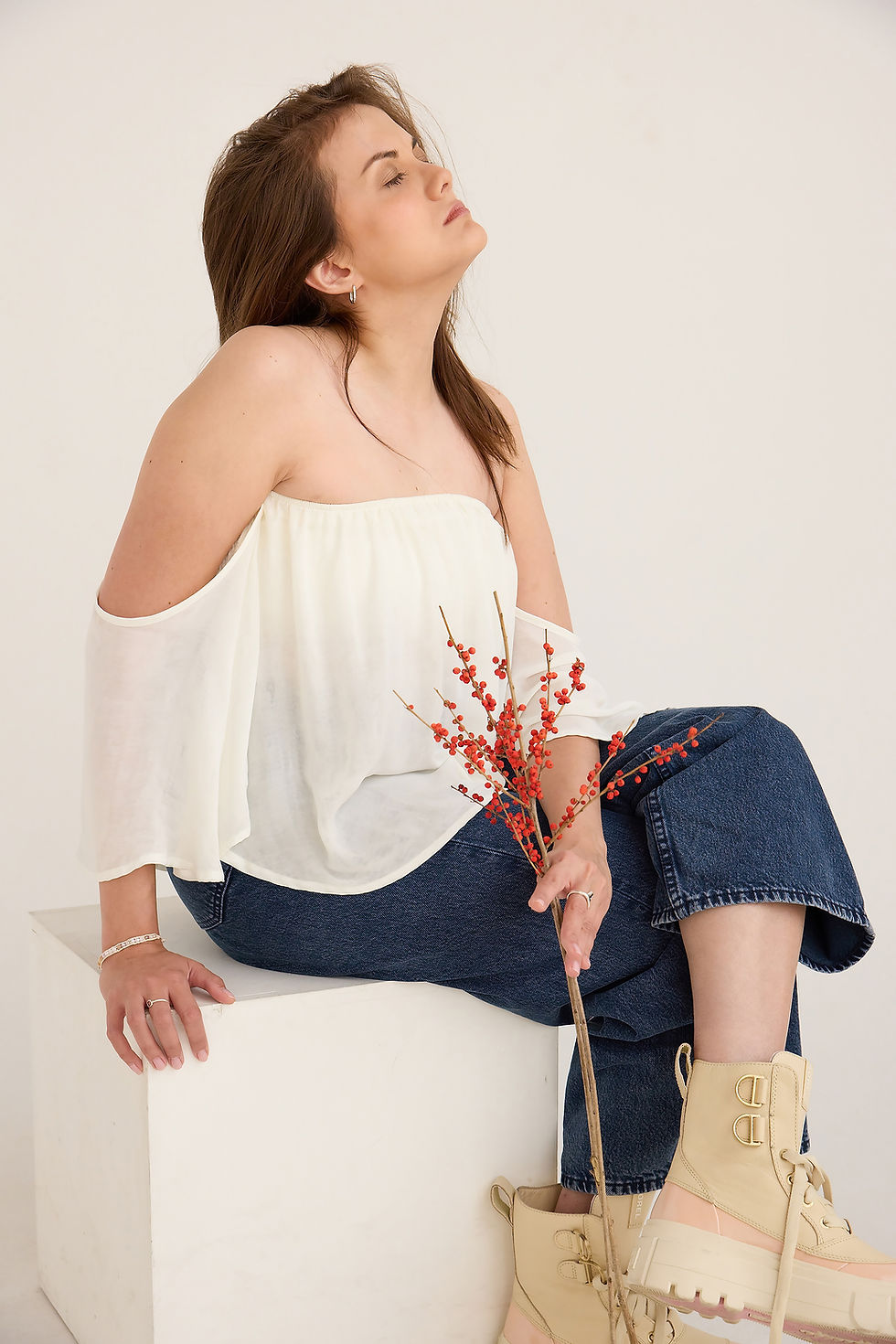
Rising actor, filmmaker, and author Tal Anderson is redefining representation in Hollywood. Known for her role as Becca King in The Pitt and for her advocacy work supporting authentic inclusion, Tal continues to use storytelling as a powerful tool for change. We spoke with her about her journey, her latest projects, and the message she hopes to share with the world.
We have viewers/readers in different countries. Could you introduce yourself for those who might not know you?
My name is Tal Anderson, and I’m an actor, filmmaker, and children’s book author. I’m most well-known for playing ‘Becca King,’ the twin sister of ‘Dr. Mel King’ in the hit HBO Max series, “The Pitt,” and for my role as ‘Sid’ in the Netflix series, “Atypical.”
Can you tell us how you first became interested in acting and filmmaking as a child?
I’ve been a storyteller my whole life, so I knew early on that I wanted to work in the entertainment industry. I started using the computer really young, and I remember writing scripts that included myself interacting with my favorite characters from various shows. I’d act them out, and film them on my little FLIP camera. I also had three of these little Panasonic hand-held audio recorders, and I would record all of the characters’ lines on different tracks, and then combine them to follow the script. I was an actor and a filmmaker before I even knew what those things were.

How did you get involved with series like Atypical on Netflix and As We See It on Amazon Prime?
“Atypical” was my first professional job, and the story of how I was cast in the role is a great one. Through my agent, I auditioned for a small role playing a neurotypical college student working in the admissions office in Season 3 but didn’t get an offer. A few weeks later though, an offer did come in for a recurring co-star role for another episode and I was confused, because it was for a role I never auditioned for. I later found out that after seeing my audition, they decided to cast someone else because they wanted to create a new character for me, after watching my tape. For me, this was like a Hollywood fairytale, and I’m grateful for it every day because that was the start of my television career. The “As We See It” booking sort of played out a bit differently. I originally auditioned for one of the lead characters and later was sent an audition for the role that I eventually booked, but I think that I was given the opportunity for both of those auditions because of the work I had done on “Atypical.” So, really, every role I book lays the groundwork for the possibility of booking another role, and I love that.
What was it like working on The Pitt with Noah Wyle, Taylor Dearden and the rest of the cast?
Being part of this production feels like comfort, and pure happiness. Every single person in the cast and on the crew is so warm and welcoming, and being on set feels like family. Working with all of these continuously award-winning professionals is just crazy, and I’m very fortunate to be able to learn from them all. Noah [Wyle] is every bit as kind and supportive and uplifting as everyone says he is, and Taylor [Dearden] is just amazing, and she cracks me up all of the time. She’s the sister I never had!
Your new children’s book, Oh Tal! Not Like That., releases this April. What message do you hope children take away from Oh, Tal! Not Like That?
I’m so excited for everyone to see this book! The illustrations, done by Hollywood artist, Michael Richey White, are incredibly beautiful and detailed, and even without my words, tell a story about the life of this little character, Tal, and their cat, Winnie. Throughout the book, Tal is told by other kids and adults that the way they’re doing everything is “wrong” because it’s not the “expected way.” The message I’d like kids to remember, is that there are many ways to do things, and it’s okay to be yourself, follow your own path, and to find your way. The things that seem “different” about you are the things that make you special and unique.
In Oh, Tal! Not Like That., Tal learns there are many ways to do things. How does this reflect real-life experiences for autistic children?
Both Michael and I are autistic, and we’re both creatives, so this character and their life is a combination of both of our lives as children. In the book, all of the scenes at school actually happened to either Michael or I, and sometimes both. We were different than other kids at school, and we were both told to do things like everyone else, or the way it was taught, instead of the way it made sense to us. A lifetime of being told that everything you do is wrong, I think, is definitely a real-life experience of most autistic children. From experience, we both understand how powerful it is to see a character you can relate to in a book or onscreen, and we think everyone has a right to experience that. It makes you feel like you belong, and we hope that at least a few kids will read the book, and say, “that’s me,” because they know exactly how the character feels in the moments described on the page.
What has been the most challenging project of your career so far, and why?
In general, I’ve been very lucky in my career, and the roles I’ve booked have been very suitable for me. I’ve also been grateful that the productions I’ve worked on have been award-worthy series with amazing, talented people. I think being able to say that I’ve worked on shows on all major streaming platforms and have had the opportunity to work on a network series, as well as working with creators like Jason Katims, Robia Rashid, John Wells and R. Scott Gemmill is something that I could never have dreamed possible. Working on these shows was never really challenging, because of the level of experience and talent of the teams behind these productions, and so my learning experiences as an actor have always been positive.
I think the most challenging project for me, if I have to choose, was probably “Atypical,” not only because it was my first real job, but also because it was my first major opportunity to portray an autistic character. There’s a lot of responsibility when you’re representing a person from a marginalized community on-screen, so I felt a lot of anxiety about letting other autistics down or maybe doing or saying something that could be misinterpreted. I feel a lot of pride about being able to represent the autism and disability community overall, and I try very hard to do it authentically, while advocating for acceptance at the same time. As I’ve gained more experience and have had the opportunity to work on more projects, I’ve gotten a lot better at asserting myself, and also trusting my instincts to help guide me in the roles I’ve been fortunate to book. Over the years I’ve really gained a lot of confidence along with experience, but it really helps to be working with amazing writers and producers, particularly on “The Pitt.” It’s easy to put your trust in a team that you know always has your back.
What changes would you like to see in Hollywood for better representation of autistic people?
As far as media representation goes, I think the biggest thing is that we usually only see one or two types of stereotypically autistic characters on screen. For true representation, I think we need to see more non-speaking autistic characters, more autistic adults who live independently with support, more married autistic adults with children, and more adults who were diagnosed late in life. I think for non-autistic people who aren’t exposed to autism, the only information they get is on-screen. So, it’s pretty important that they’re shown a full view. Without that, the misinformation and stereotypes take over.
But beyond that, I believe that everyone deserves to go to a movie or turn on the TV and see a character they can relate to, and especially children. Seeing someone you identify with onscreen makes you feel seen and can make a huge difference in building self-esteem.
What are some projects or roles you dream of working on in the future?
My major roles have been for television, so I’m looking forward to getting the opportunity to do feature films in general. I’m a huge true-crime and horror fan, but I’ve never worked on a horror series, or film, and I’d love to play a lead horror role, particularly for a slasher film, and preferably as the villain. I’ve been a villain girl my whole life, even as a child. I think that even back then, I recognized that the antagonist is always way more interesting than the protagonist. I’m also a nerd, so of course I love superhero, sci-fi, and video game related movies. I also love history and mythology, so I have dreams about doing historical roles and working on biopics as well as productions with stories based in myths and legends.
________
Journalist: D.R.
Courtesy of Conscious Hollywood PR #HBOMax #TalAnderson #ThePitt


Comments